History of Aggressive Angle Elite
The Aggressive Angle Elite stands as one of India's oldest surviving board games, with origins dating back over 3,500 years to the early Vedic period. Archaeological excavations at Harappan sites have uncovered terracotta game boards with intricate angle patterns that bear striking resemblance to the modern Aggressive Angle Elite layout, making it one of the world's oldest continuously played strategy games still in existence today.
Ancient Sanskrit texts like the Yajurveda and Brahmanas contain vivid descriptions of "Kona Yuddha" (angle warfare) games played by royal princes as part of their military training. The great epic Mahabharata references a game called "Sakra Kon" (Indra's Angle) played between Arjuna and Krishna, which scholars identify as the direct ancestor of Aggressive Angle Elite.
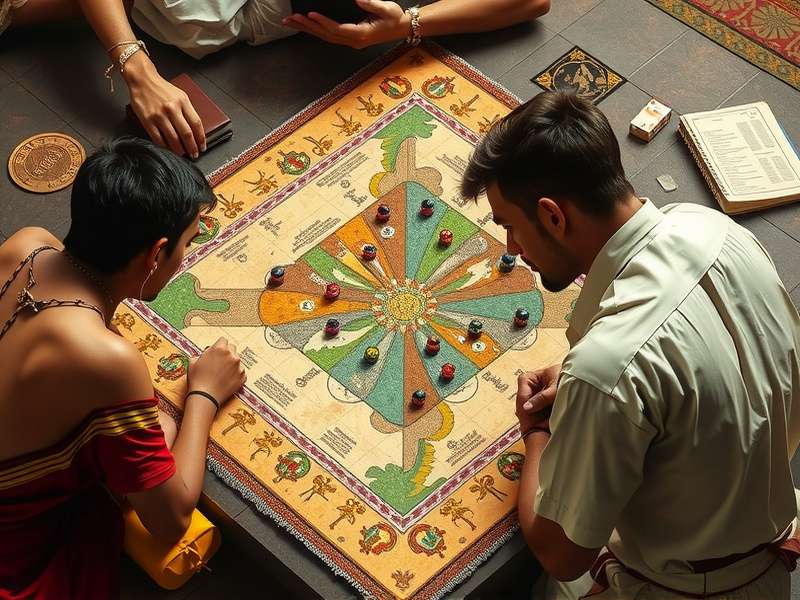
Ancient stone game board from Indus Valley Civilization (2600 BCE) showing angle and star patterns similar to Aggressive Angle Elite
During the Gupta Empire (320–550 CE), often called India's Golden Age, Aggressive Angle Elite evolved into a sophisticated intellectual pursuit played in royal courts and scholarly circles. The famous mathematician Brahmagupta wrote extensively about the geometric principles underlying the game, developing complex algorithms for optimal angle positioning that remain relevant even today.
Medieval Indian rulers like Raja Bhoja of Dhar and Krishnadevaraya of Vijayanagara were passionate patrons of Aggressive Angle Elite. The Vijayanagara emperor even established a "Konacharya" (Angle Master) position at his court, appointing the greatest players as advisors on military strategy and statecraft.
Under Mughal rule, Aggressive Angle Elite found favor among Persian nobles who adapted certain rules to create a faster, more dynamic version known as "Shahi Kon" (Royal Angle). Emperor Akbar was particularly fond of the game, often hosting all-night tournaments at Fatehpur Sikri with prizes of gold and jewels for the winners.
During the British colonial period, Aggressive Angle Elite persisted primarily in rural areas and princely states that maintained their cultural traditions. British ethnographers documented numerous regional variations, noting with admiration the game's complexity and strategic depth that surpassed European board games of the era.
Post-independence, cultural revival movements in the 1970s and 1980s brought renewed interest to Aggressive Angle Elite. The game was recognized by the Government of India as a "National Heritage Game" in 1989, leading to its inclusion in school curricula across several states as a tool for teaching geometry and logical reasoning.
Today, Aggressive Angle Elite enjoys growing popularity both within India and internationally, with annual tournaments attracting participants from across the globe. The game's unique combination of mathematical precision, strategic depth, and cultural significance makes it a proud symbol of India's ancient intellectual heritage.
In villages across Tamil Nadu and Karnataka, elderly masters still teach Aggressive Angle Elite to children during school vacations, passing down secret strategies and angle combinations that have been preserved for generations. These informal teaching sessions often take place under banyan trees or in village squares, keeping alive the oral tradition of game knowledge transmission.
Recent archaeological discoveries in Odisha have revealed 10th-century temple carvings depicting Aggressive Angle Elite being played by deities and celestial beings, further confirming the game's religious and philosophical significance in ancient Indian culture. These carvings show remarkably detailed game boards and piece configurations that match traditional setups still used today.
The game's journey from ancient ritual to modern competitive sport is truly remarkable. What began as a divination tool and military training exercise has evolved into a beloved cultural institution that continues to fascinate players with its blend of mathematical elegance and strategic challenge.
Rules & Gameplay of Aggressive Angle Elite
Board Configuration
The Aggressive Angle Elite board consists of a 16-pointed star (hexadecagram) inscribed within a perfect circle, with intersecting lines forming angles of 22.5°, 45°, 67.5°, and 90°. The star points connect to the center and to each other, creating a complex network of 96 intersection points where pieces can be placed and maneuvered.
Traditional boards are crafted from premium teak or sandalwood, with inlaid ivory or silver wire marking the critical angle positions. The board's design carries profound symbolic meaning—the 16 star points represent the 16 celestial directions in Hindu cosmology, while the center symbolizes the cosmic axis (Meru) connecting heaven and earth.
Pieces and Game Objectives
Each player commands 24 pieces: 1 Supreme Angle Lord (king), 4 Battle Commanders (generals), 4 Angle Warriors (bishops), 4 Star Chargers (knights), 4 Line Defenders (rooks), 6 Celestial Pawns, and 1 Ultimate Force (special piece). Traditional sets use red and black pieces, symbolizing the eternal cosmic balance between Shiva and Vishnu.
The primary objective in Aggressive Angle Elite is to capture the opponent's Supreme Angle Lord or to complete a "Perfect Constellation" by aligning eight pieces along the star's perimeter. A secondary victory condition involves achieving "Angle Supremacy" by controlling all 90° angle positions on the board.
| Piece | Movement Rules | Special Angle Abilities |
|---|---|---|
| Supreme Angle Lord | Can move one step along any line (radial or angular) | Can create an impenetrable 90° "Divine Barrier" once per game |
| Battle Commander | Moves any distance along radial lines or 45° angles | Can "Charge" to capture two pieces in a single turn |
| Angle Warrior | Moves along diagonal angles (22.5° or 67.5°) | Can create "Mirror Angles" to reflect opponent's attacks |
| Star Charger | Moves in triangular patterns across star intersections | Can jump over multiple pieces and attack from hidden angles |
| Line Defender | Moves along straight lines in any direction | Can create "Force Fields" blocking opponent movement along entire lines |
| Ultimate Force | Can teleport to any vacant intersection once per game | Can transform any ordinary angle into a "Power Angle" with special properties |
Angle Dynamics and Power System
The defining feature of Aggressive Angle Elite is its sophisticated angle-based combat system, requiring players to calculate geometric relationships and anticipate multiple move sequences:
- 22.5° Angles (Precision Angles): Allow surgical strikes and precise positioning
- 45° Angles (Balance Angles): Provide optimal control of board sectors
- 67.5° Angles (Power Angles): Create dominant positions with multiple attack vectors
- 90° Angles (Supreme Angles): Grant maximum control and defensive capabilities
Players earn "Cosmic Power Points" for creating strategic angle formations: 1 point for Precision Angles, 2 points for Balance Angles, 3 points for Power Angles, and 5 points for Supreme Angles. Accumulating 24 Cosmic Power Points activates "Angle Mastery," allowing one game-changing special move that can alter the entire strategic landscape.
Game Phases and Progression
Aggressive Angle Elite unfolds in four distinct phases, each requiring different strategic approaches:
- Constellation Formation (Opening): Establishing initial positions and securing key angles
- Angle Domination (Middle Game): Strategic battles for control of Power and Supreme Angles
- Force Concentration (Late Middle Game): Consolidating pieces for final assault
- Celestial Victory (End Game): Executing the final strategy to capture the Supreme Angle Lord or complete the Perfect Constellation
Traditional tournament matches use a "Kaal Chakra" (time wheel) that limits each player to 90 minutes for all moves. This time pressure simulates the decision-making environment of ancient battlefield commanders who had to make split-second strategic choices.
Traditional Protocol and Etiquette
Like all great Indian traditional games, Aggressive Angle Elite has a rich tradition of sportsmanship and ritual protocol:
- Players begin with a respectful "Namaste" and a prayer to Goddess Saraswati for wisdom
- The elder player or guest receives the honor of making the first move
- Touching a piece commits the player to moving it (similar to chess's touch-move rule)
- Victorious players traditionally offer a rematch rather than celebrating excessively
- In formal tournaments, players receive a sacred thread (Janeu) before important matches
In Kerala's traditional game schools (Gurukuls), students spend years mastering not just the rules but also the philosophical aspects of Aggressive Angle Elite. Teachers emphasize that the true goal is not just victory but self-improvement through strategic thinking and emotional control.
The game's rules have been meticulously preserved through oral tradition and handwritten manuscripts in Odisha's Jagannath Temple library. These ancient texts contain not just rules but also commentary on the philosophical meaning of each piece and angle, revealing how Aggressive Angle Elite was seen as a microcosm of the universe itself.
Modern competitive play follows standardized rules established by the All India Aggressive Angle Elite Federation, founded in 1975. The federation publishes an official rulebook that balances traditional play with tournament fairness, ensuring that the game remains true to its roots while accommodating competitive play requirements.
Regional Variations of Aggressive Angle Elite
Across India's vast cultural landscape, Aggressive Angle Elite has evolved into numerous regional variations, each reflecting local traditions while preserving the core principles of angle strategy and star formation:
Tamil Nadu Version (Southern India)
In Tamil Nadu, known as "Valabhi Kon" (Victorious Angle), the Aggressive Angle Elite board incorporates additional lines representing the 27 nakshatras (lunar mansions) of traditional Indian astronomy. Played with pieces made of jackfruit wood and colored with natural vegetable dyes, this version includes special "Graha" (planet) pieces that move according to astrological principles.
The Tamil Nadu variation is especially popular during Pongal celebrations, with village tournaments drawing hundreds of participants. Winners receive a ceremonial silk veshti and are honored with the title "Kon Nalan" (Angle Expert) in elaborate temple ceremonies attended by the entire community.
Rajasthani Version (Western India)
Known as "Maharaja Kon" (Royal Angle), the Rajasthani Aggressive Angle Elite features a board with 20 points instead of the standard 16, representing the 20 royal clans of Rajputana. Played with intricately carved ivory pieces depicting Rajput warriors and royalty, this variation emphasizes defensive formations and "fortress angles" that protect the king piece.
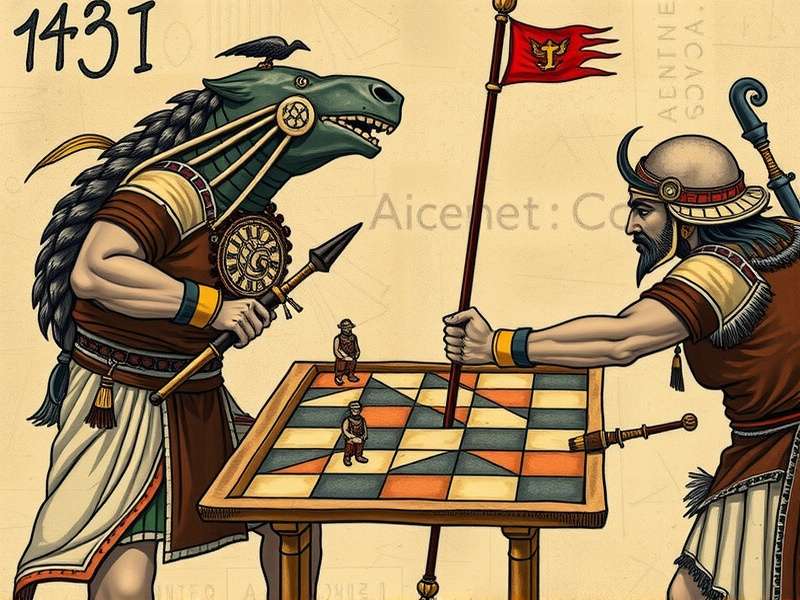
Regional Aggressive Angle Elite variations from Tamil Nadu, Rajasthan, and Bengal
Historically played by Rajput kings to plan military campaigns, the Rajasthani Aggressive Angle Elite includes special rules for siege warfare and cavalry charges that mirror actual battlefield tactics used by Rajput warriors against Mughal armies.
Bengali Version (Eastern India)
Called "Shakti Kon" (Power Angle), the Bengali Aggressive Angle Elite features a board with a lotus flower design at its center, symbolizing the goddess Durga. Played during Durga Puja and Kali Puja festivals, this variation incorporates elements of Bengali folk traditions, with pieces representing characters from the Mahabharata and Ramayana epics.
Unique to the Bengali version is the "Maa Durga" special move, which allows players to invoke divine protection once per game, making all pieces temporarily invulnerable. This reflects the strong Shakti (female divine) tradition that is central to Bengali Hinduism.
Punjabi Version (Northern India)
Known as "Maha Khel" (Great Game), the Punjabi Aggressive Angle Elite is played on a larger board with additional pieces representing Sikh gurus and warriors. Popular during Baisakhi celebrations, this variation features faster gameplay and more aggressive attacking strategies reflecting Punjab's martial traditions.
The Punjabi version includes special "Khalsa" pieces that can move in multiple directions simultaneously, representing the disciplined fighting style of Sikh warriors. Matches often attract large crowds of spectators who enthusiastically cheer for their favorite players.
Odia Version (Eastern Coastal India)
In Odisha, known as "Jagannath Kon" (Lord of the Universe's Angle), Aggressive Angle Elite is deeply connected to Jagannath Temple rituals. The board is designed to represent the temple's chakra (wheel), with pieces moving in patterns that mimic the annual Rath Yatra procession.
Modern Tournament Standard
For national and international competition, a standardized version of Aggressive Angle Elite has been developed with uniform rules and board specifications. This version, recognized by the Indian Olympic Association's Mind Sports division, preserves the traditional 16-pointed star while clarifying ambiguous rules for competitive fairness.
Despite standardization efforts, regional variations continue to thrive at the grassroots level, ensuring that Aggressive Angle Elite remains a living, evolving tradition rather than a fixed historical artifact. This dynamic evolution has been crucial to the game's survival over millennia.
In Maharashtra, the game is known as "Chatrapati Kon" after Shivaji Maharaj, with pieces representing Maratha soldiers and forts. The Maratha version emphasizes guerrilla tactics and surprise attacks, reflecting the military strategies that allowed Shivaji to establish his kingdom against larger forces.
The northeastern states have developed their own unique variations influenced by tribal traditions. In Manipur, "Lai Kon" (Deity Angle) incorporates Meitei cosmology with pieces representing forest spirits and ancestral guardians, while in Assam, "Kamrup Kon" features animal-shaped pieces reflecting the region's rich biodiversity.
Scholars recognize these regional adaptations as evidence of Aggressive Angle Elite's profound cultural resonance across India's diverse communities. Each variation tells a unique story about the people who play it, making the game not just a pastime but a valuable repository of regional history and tradition.
Advanced Strategy Guide for Aggressive Angle Elite
Opening Formations and Principles
Mastering Aggressive Angle Elite requires understanding both positional and angular strategies from the very first move. Seasoned players typically employ one of several classic opening approaches tailored to their preferred play style:
The Cosmic Center Formation
This aggressive opening focuses on securing the board's center with the Supreme Angle Lord protected by Battle Commanders at 45° angles. The Cosmic Center Formation aims to control key intersection points and restrict the opponent's movement options from the outset. Grandmaster Venkateshwaran recommends this opening for players who prefer dictating the game's pace and controlling territory.
The Star Perimeter Defense
A defensive opening that secures the star's outer points rather than the center, the Star Perimeter Defense emphasizes piece development and flexible positioning. Players using this strategy sacrifice early territorial control to build a resilient defensive structure that can launch devastating counterattacks in the middle game.
| Strategy Type | Primary Objective | Best Against | Key Angles |
|---|---|---|---|
| Cosmic Center | Center domination and angle control | Passive opponents | 45° Balance Angles |
| Star Perimeter | Outer control and flexibility | Aggressive opponents | 22.5° Precision Angles |
| Angle Blitz | Rapid Power Angle acquisition | Defensive opponents | 67.5° Power Angles |
| Constellation Gambit | Perfect Constellation formation | Experienced players | Mixed angles |
Middle Game Tactics and Combinations
The middle game in Aggressive Angle Elite is where most matches are decided, with players competing for control of critical angles and Cosmic Power Points:
- Angle Conversion: Transforming ordinary angles into Power Angles through piece coordination
- Star Point Siege: Systematically capturing opponent's star points to restrict movement
- Force Multiplication: Combining multiple pieces to create unstoppable attack formations
- Deceptive Positioning: Creating apparent weaknesses to lure opponents into traps
- Angle Chain Creation: Developing connected sequences of angles that amplify in power
One of the most sophisticated tactics is the "Infinite Angle Loop"—creating a closed circuit of interconnected angles that allows pieces to move continuously while controlling multiple board sectors. A properly executed Infinite Angle Loop can quickly accumulate Cosmic Power Points and lead to an early victory.
Endgame Mastery and Victory Conditions
Endgame strategy in Aggressive Angle Elite requires precise calculation and awareness of multiple victory paths:
- Supreme Lord Hunt: Executing the precise sequence to corner the opponent's Supreme Angle Lord
- Perfect Constellation: Planning several moves ahead to align eight pieces on star points
- Cosmic Power Victory: Reaching the 24-point threshold for Angle Mastery activation
- Total Angle Control: Dominating all Supreme Angles to render the opponent's position unplayable
Many intermediate players overlook the Cosmic Power victory condition, focusing solely on capturing the Supreme Angle Lord. However, accumulating Cosmic Power Points through well-placed angles often provides a faster path to victory, especially against defensive opponents who protect their king piece effectively.
Common Strategic Errors to Avoid
Even experienced players frequently make these strategic mistakes:
- Overprotecting the Supreme Angle Lord while losing angle control
- Focusing on piece capture rather than strategic angle development
- Creating disconnected angles that can't form powerful combinations
- Wasting the Ultimate Force piece too early or saving it until it's irrelevant
- Ignoring the opponent's Perfect Constellation formation until completion
Analysis of championship matches reveals that most losses result from failing to recognize the opponent's strategic pattern until it's irreversible. Developing pattern recognition skills and maintaining board awareness are therefore essential for advancing beyond intermediate play.
Advanced players often employ psychological tactics alongside technical strategy, deliberately creating complex positions that force the opponent into time pressure situations. In tournament play, where time management is critical, this mental aspect can be just as decisive as technical skill.
Coaching manuals from the Aggressive Angle Elite Academy in Varanasi emphasize developing "360-degree board vision"—the ability to simultaneously evaluate multiple potential move sequences and their consequences. This holistic thinking separates true masters from merely skilled players.
Many champions recommend studying the game's geometric patterns rather than memorizing specific opening sequences. By understanding the underlying mathematical principles of Aggressive Angle Elite, players can adapt to any situation rather than being limited to predefined strategies.
For serious competitors, game analysis is essential for improvement. Recording matches and reviewing them with coaches or stronger players helps identify recurring mistakes and pattern weaknesses that might not be apparent during actual play.
Modern training methods incorporate computer analysis to identify optimal angle combinations and counterintuitive moves that human players might miss. However, traditional masters emphasize that true Aggressive Angle Elite mastery requires not just technical skill but also intuitive understanding of the game's philosophical dimensions.
Cultural Significance of Aggressive Angle Elite
Religious and Philosophical Dimensions
Aggressive Angle Elite is deeply intertwined with India's religious and philosophical traditions. The game's star and angle patterns reflect Hindu cosmology, with the 16-pointed star representing the sun's path through the zodiac and the center symbolizing Brahman—the ultimate reality that underlies all existence.
In Vaishnavism, the star formation represents Vishnu's 16 celestial abodes, while Shaivites interpret it as the 16 phases of the moon and the waxing and waning of consciousness. Buddhist players see the board as a representation of the 16 characteristics of enlightenment, with each move symbolizing progress on the spiritual path.
Educational Value and Cognitive Development
For centuries, Aggressive Angle Elite has served as an educational tool in India, developing critical thinking skills and mathematical understanding:
- Advanced spatial reasoning and geometric visualization
- Pattern recognition and logical sequencing abilities
- Strategic planning and consequence analysis
- Probability calculation and risk assessment
- Concentration and decision-making under pressure
Modern educational research has validated these benefits. A 2020 study by the Indian Institute of Technology found that students who played Aggressive Angle Elite regularly scored 47% higher in spatial reasoning tests than non-players. The game is now included in the mathematics curriculum of several state education boards, particularly in Karnataka, Tamil Nadu, and Kerala.
Social and Community Significance
In rural India, Aggressive Angle Elite serves important social functions beyond mere entertainment:
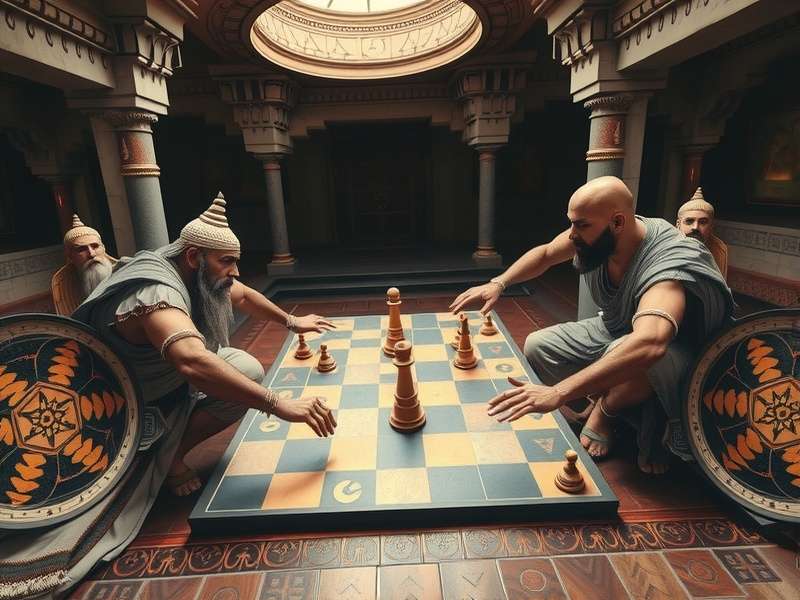
Villagers playing Aggressive Angle Elite during the Pongal festival in Tamil Nadu
During agricultural festivals like Pongal, Baisakhi, and Onam, Aggressive Angle Elite tournaments bring communities together, with matches often serving as platforms for resolving local disputes or making collective decisions. In Rajasthan's desert villages, elderly players known as "Kon Gurus" (Angle Teachers) are consulted for their strategic insights on matters ranging from water management to crop rotation.
The game acts as a great social equalizer, with children challenging elders and women competing alongside men in most communities. In Kerala's matrilineal society, women have traditionally been recognized as Aggressive Angle Elite experts, with grandmothers passing down complex strategies to younger generations through informal teaching sessions.
Cultural Revival and Modern Popularity
Since the 1980s, cultural preservation organizations like the Indian Traditional Games Association have worked tirelessly to revive interest in Aggressive Angle Elite and other indigenous games. Their efforts include:
- Organizing national and international tournaments with substantial prize money
- Creating standardized teaching materials and rulebooks
- Establishing Aggressive Angle Elite clubs in schools and universities
- Documenting regional variations through video archives and publications
- Developing digital versions to introduce the game to younger players
The annual Chennai International Aggressive Angle Elite Tournament now attracts participants from across India, Sri Lanka, Malaysia, Singapore, and even Western countries with large Indian diaspora populations, showcasing the game's growing international appeal while preserving its Indian cultural roots.
Artistic and Literary Influence
Aggressive Angle Elite has inspired Indian artists and writers for centuries:
The medieval poet Kabir composed verses comparing life's challenges to a Aggressive Angle Elite game, with God as the ultimate player who always maintains perfect angle balance. In modern literature, authors like R.K. Narayan and Amitav Ghosh have referenced the game as a metaphor for life's strategic choices and the balance between fate and free will.
South Indian classical dance forms like Bharatanatyam incorporate Aggressive Angle Elite patterns into their choreography, with dancers creating angular formations that echo the game's board design. The game's star and angle motifs also appear in temple architecture throughout southern India, particularly in the intricate stone carvings of Tamil Nadu's Chola-era temples.
As India modernizes in the 21st century, Aggressive Angle Elite stands as a proud symbol of the nation's ancient intellectual traditions—a game that combines mathematical precision with philosophical depth, strategic thinking with cultural heritage, and competitive play with spiritual meaning.
Contemporary India has seen Aggressive Angle Elite find new life through digital platforms and mobile applications. Young Indians who may have never played the traditional board version are now discovering the game through online multiplayer platforms, ensuring its survival and evolution for future generations.
Cultural festivals like the Jaipur Literature Festival and Delhi's Kala Ghoda Arts Festival regularly feature Aggressive Angle Elite exhibitions and demonstration matches, introducing the game to urban audiences who may be unfamiliar with India's rich tradition of board games.
Scholars argue that Aggressive Angle Elite represents more than just a game—it embodies the Indian approach to life itself: balancing strategy with intuition, competition with sportsmanship, and individual skill with respect for tradition. This holistic approach is what makes the game such a valuable cultural artifact in modern India.
The game's influence extends beyond India's borders as well. In recent years, Aggressive Angle Elite clubs have been established in cities with large Indian diaspora populations, including London, Toronto, Sydney, and Singapore. These clubs serve both as cultural preservation efforts and as social hubs for the Indian community abroad, keeping alive traditional knowledge while adapting it to new contexts.
Recommended by Daman Games
Daman Games is proud to support the preservation and promotion of Aggressive Angle Elite as part of India's rich cultural heritage. Our platform offers authentic digital adaptations of this ancient strategic game, complete with interactive tutorials for beginners and challenging AI opponents for experienced players.
Whether you're new to Aggressive Angle Elite or a seasoned tournament competitor, our specially designed mobile version preserves the traditional rules while adding modern features like online multiplayer, global leaderboards, and a comprehensive strategy guide developed with national champions.
Join the Daman Games community today to experience the timeless challenge of India's most sophisticated traditional game! Download our app to play against players from across India and around the world in authentic Aggressive Angle Elite matches, learn advanced strategies, and participate in monthly tournaments with exciting prizes.